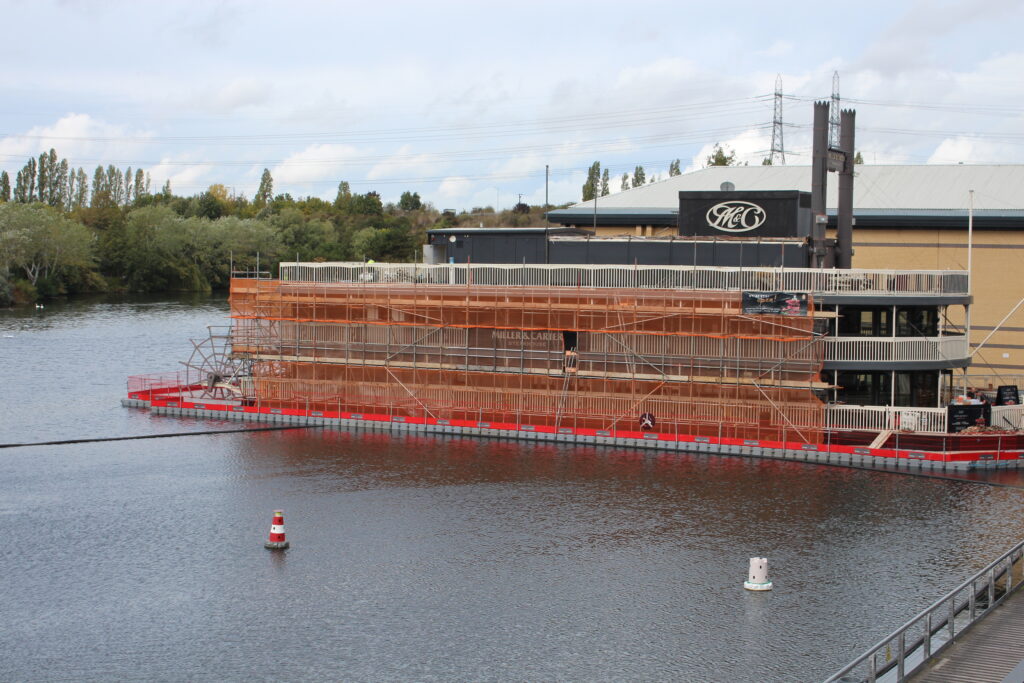



A quick look at the essentials behind a stable floating platform
A pontoon might look simple once it’s afloat, but stability starts long before it reaches the water. Here are the fundamentals that keep a platform safe, predictable and behaving exactly as it should.
Load comes first
What the pontoon needs to support dictates everything — buoyancy, freeboard and layout.
No guesswork, just accurate calculations based on the real load.
The right footprint
Shape affects behaviour.
Long and narrow, wide and square, or something awkwardly in-between — the configuration is designed to stay stable under use, not just fit the space.
Anchoring that holds
Different sites need different anchoring: bed anchors, piles, or multi-point moorings.
If it keeps the pontoon exactly where it should be, it’s the right system.
Controlled movement
Water moves, and the pontoon will too — within limits.
We plan for wind, waves, currents and foot traffic so movement stays predictable and safe.
A steady platform, every time
From construction and events to filming and public access, stable pontoons allow projects to run safely and smoothly.
Done properly, the engineering is invisible — and that’s exactly how it should be.