


If you’ve never hired a floating pontoon before, it can be hard to know where to start. What information do you need to provide, how does pricing work, and what actually happens on the day of installation? This guide walks through the full floating pontoon hire process from first enquiry to collection, so you know what to expect.
Step 1: Get in Touch With Your Requirements
The process starts with a conversation about what you need the pontoon for, whether that’s a bridge survey or inspection platform, a floating walkway or temporary bridge, or a platform for an event. Useful information to have ready includes the location, the water type (river, lake, dock, reservoir), how long you’ll need the pontoon for, and what it needs to support e.g foot traffic or heavier loads such as a MEWP, excavator, or scaffold tower.
Step 2: Site-Specific Planning
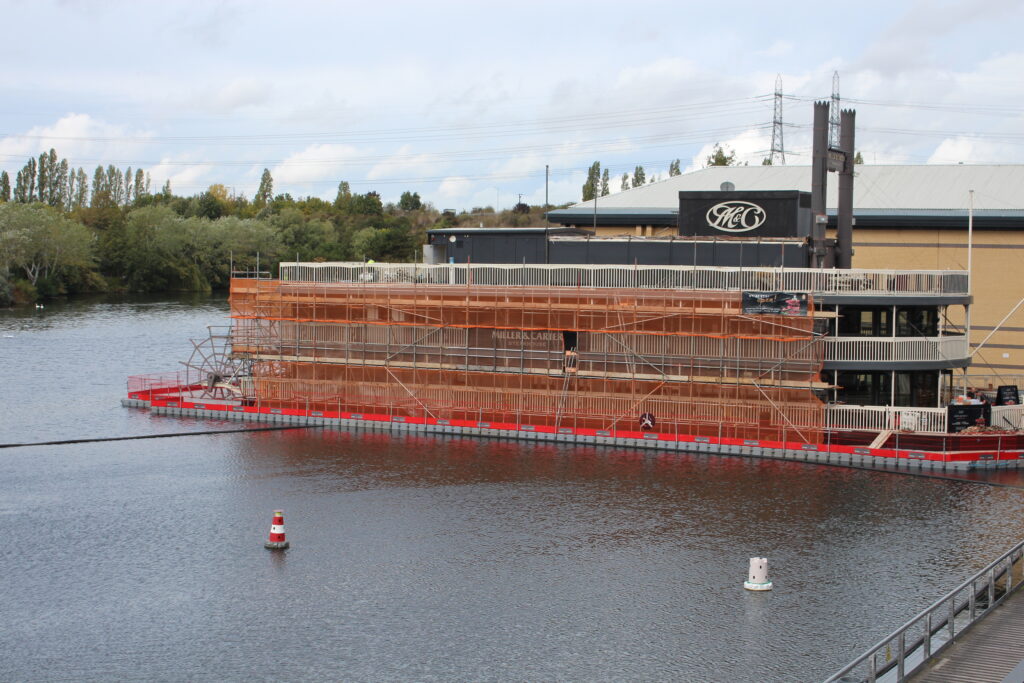
Every site is different, so most hire processes involve some back-and-forth to work out the right configuration. This might mean a phone call, a Teams meeting, or a site visit; particularly for jobs with unusual access constraints, tight timeframes, or heavy loads. See how this played out for a recent demolition project in Birmingham, where staggered delivery and a double-stacked configuration were worked out in advance to suit the site.
Step 3: Quote and Confirmation
Once the requirements are understood, you’ll receive a quote covering hire duration, delivery, crew for installation and collection, and any additional equipment needed, such as handrails or reinforced decking. At this stage it’s also worth asking about turnaround; modular pontoon systems can often be mobilised faster than people expect, sometimes within days rather than weeks.
Step 4: Delivery and Installation
Modular pontoon systems are typically delivered in sections and assembled onsite, which makes them well suited to sites with restricted or unconventional access. We’ve even installed pontoons inside enclosed buildings, lifting sections through a doorway where no normal launch point existed. For larger jobs, delivery and installation may be staggered over several days to reduce disruption to the wider site.
Step 5: Use and Ongoing Support
Once installed, the pontoon is ready to support whatever it was designed for a working platform, a walkway, or an event structure. Depending on the job, additional support such as a safety boat and crew may be provided throughout the hire period for extra reassurance.
Step 6: Collection and Removal
At the end of the hire period, the pontoon is dismantled and removed, usually following the same staggered approach used for delivery on larger jobs. Because the system is modular, breakdown is generally efficient and leaves no lasting impact on the site.
FAQS
How long does the floating pontoon hire process take from enquiry to installation?
It depends on the complexity of the site and the size of the job. Straightforward hires can sometimes be arranged and installed within a matter of days, while larger commercial projects with specific load requirements or restricted access usually need more planning time to get the configuration right before installation begins.
Can I hire a floating pontoon at short notice?
Yes, in many cases. Modular pontoon systems are designed to be assembled quickly, which means short-notice hires are often possible depending on stock availability and the complexity of the site. It’s always worth calling to discuss your timeframe rather than assuming it’s too tight.
Do I need to provide anything onsite before the pontoon arrives?
This varies by project. For straightforward event or walkway hires, minimal preparation is usually needed. For commercial or construction sites, access for delivery vehicles, a suitable launch point (or an alternative access arrangement, as with restricted sites), and coordination with any other contractors onsite may all need to be planned in advance.
What’s included in a typical pontoon rental UK quote?
A standard quote will usually cover the pontoon hire itself, delivery and collection, and the crew required for installation and breakdown. Additional items such as safety boats, handrails, fenders, or reinforced decking are typically quoted separately depending on the nature of the job.
Is pontoon hire suitable for heavier loads like excavators or MEWPs?
Yes — modular pontoons can be configured and even double-stacked to provide the buoyancy and stability needed for heavier plant. The right configuration depends on the specific weight and footprint of the equipment involved, which is why site-specific planning (Step 2) matters.
Get a Quote
If you’re planning a project that needs floating pontoon hire, get in touch with our team to talk through your requirements; the earlier you reach out, the more options you’ll have. Call today on 01590 607104 or email us at admin@floatingpontoonhire.co.uk